It’s true that the spring season often brings a sense of optimism to the hospitality sector. Here’s a breakdown of some key factors influencing this:

  • Increased Travel:
    • Spring often marks the beginning of increased travel, with people eager to escape winter and enjoy warmer weather. This leads to higher occupancy rates for hotels and increased patronage for restaurants and other hospitality businesses.
    • With the world having had time to adjust to post pandemic travel, and with many people wanting to make up for lost time, travel numbers are looking healthy.
  • Seasonal Activities:
    • Many destinations offer special spring-themed events and activities, attracting tourists and locals alike. This can include festivals, outdoor markets, and nature-based experiences.
  • Positive Consumer Sentiment:
    • The arrival of spring often brings a sense of renewal and optimism, which can translate to increased consumer spending. People are more likely to dine out, take vacations, and engage in leisure activities.
  • Trends within the Hospitality Industry:
    • There is a strong push for sustainable practices, and for creating unique customer experiences. This is an ongoing trend, that is being added to, with the addition of new technologies.
    • The use of technology to enhance customer experiance, is also a very strong trend.

However, it’s also important to acknowledge that the hospitality sector faces ongoing challenges, such as:

  • Economic Factors:
    • Fluctuations in the economy can impact consumer spending and travel patterns.
  • Labour Shortages:
    • Many hospitality businesses continue to struggle with finding and retaining qualified staff.
  • Changing Consumer Preferences:
    • The industry must adapt to evolving consumer preferences, such as the growing demand for personalised experiences and sustainable practices.

Overall, while spring brings positive momentum to the hospitality sector, businesses must remain adaptable and responsive to the ever-changing market conditions. Over the copming weeks we will delve deeper into some of the points we have hightlighted in this blog

Paramount Personnel: Your Partner in Hospitality

No matter where you choose to work, Paramount Personnel can help you find the perfect restaurant job. We have a wide range of hospitality roles available in both city and countryside locations. Contact us today to learn more about how we can help you take the next step in your career.

It’s absolutely true that front-of-house work presents distinct characteristics depending on whether you’re in a bustling city hotel or a tranquil rural one. Here’s a breakdown of the key differences:

City Hotels:

  • Fast-Paced Environment:
    • City hotels often experience a high volume of guests, leading to a rapid and demanding work environment.
    • Front-of-house staff must be highly efficient, organised, and capable of multitasking.
  • Diverse Clientele:
    • City hotels attract a diverse range of guests, including business travelers, tourists from around the world, and locals.
    • Staff must be adaptable and possess excellent communication skills to cater to various cultural backgrounds and needs.
  • Emphasis on Efficiency and Professionalism:
    • Due to the fast pace and high expectations, city hotels prioritize efficiency and a polished, professional demeanor.
    • There is often a greater focus on streamlined processes and technological proficiency.
  • Focus on business and event management:
    • City hotels are much more likely to host large scale events and conferences. Therefore front of house staff will be much more involved in the logistics of those events.

Rural Hotels:

  • Relaxed Atmosphere:
    • Rural hotels typically offer a more relaxed and intimate atmosphere. 
    • Front-of-house staff have the opportunity to build closer relationships with guests.
  • Personalised Service:
    • Guests in rural hotels often seek a more personalised and attentive experience.
    • Staff are expected to provide warm, friendly service and go the extra mile to meet guests’ needs.
  • Emphasis on Local Knowledge:
    • Rural hotel staff often serve as local ambassadors, providing guests with information about the surrounding area, attractions, and activities.
    • Knowledge of the local community and its offerings is highly valued.
  • Wider range of duties:
    • In smaller rural hotels, front of house staff may have a wider range of duties. They may have to cover reception, bar and dining room duties.  

In summary:

  • City hotels prioritise efficiency, professionalism, and handling high volumes of guests.
  • Rural hotels emphasise personalised service, local knowledge, and creating a warm, welcoming atmosphere, so essentially, it boils down to the difference between a high-energy, fast-paced environment and a more relaxed, personal one.

The chef industry has a well-defined hierarchy, often referred to as the “Brigade de Cuisine,” which is a French term that translates to “kitchen brigade.” This system was developed by Auguste Escoffier in the late 19th century to streamline kitchen operations and ensure efficiency. Here’s a breakdown of the typical hierarchy: 

1. Executive Chef (Chef de Cuisine):

  • At the very top is the Executive Chef, also known as the Head Chef. They are responsible for the overall management of the kitchen, including menu planning, staff supervision, budgeting, and maintaining quality standards. In some establishments, especially larger ones, there might be an Executive Chef who oversees multiple restaurants or locations. 

2. Sous Chef (Second Chef):

  • The Sous Chef is the second-in-command and assists the Executive Chef in managing the kitchen. They often supervise the other chefs, ensure smooth operations during service, and step in when the Executive Chef is absent. 

3. Chef de Partie (Station Chef):

  • These are specialized chefs responsible for a specific area of food preparation. Examples include:
    • Saucier: Responsible for sauces and gravies. 
    • Boucher: Handles meat preparation.
    • Poissonier: Prepares fish and seafood. 
    • Rotisseur: Roasts meats. 
    • Friturier: Specializes in fried foods. 
    • Grillardin: Cooks grilled dishes. 
    • Garde Manger: Prepares cold dishes, salads, and appetizers.  
    • Pâtissier: Creates pastries, desserts, and baked goods.  

4. Commis Chef (Junior Chef):

  • Commis Chefs are entry-level cooks who assist the Chef de Parties in their respective stations. They are typically recent culinary school graduates or individuals starting their culinary careers. They learn by observing and working alongside experienced chefs.

5. Kitchen Porter/Dishwasher:

  • These individuals play a crucial role in maintaining cleanliness and organization in the kitchen. They are responsible for washing dishes, cleaning equipment, and assisting with basic food preparation tasks.  

Additional Roles:

  • Pastry Chef: In some kitchens, the Pâtissier may have a separate hierarchy with a Head Pastry Chef overseeing a team of pastry cooks.
  • Kitchen Manager: In larger establishments, a Kitchen Manager may handle administrative tasks, inventory, and ordering, allowing the Executive Chef to focus on culinary aspects.  

The size and structure of the kitchen brigade can vary depending on the size and type of restaurant. Smaller establishments may have fewer roles, while larger ones may have a more extensive hierarchy.  The titles and responsibilities may also differ slightly from one establishment to another.

If you are looking for a new job in the hospitality industry, please get in touch today. We would be happy to help you find your dream job. get in touch on 0345 241 1000 or email the team info@paramountpersonnel.com

The hospitality industry in the UK is a vital part of the economy, employing over 3 million people and contributing £72 billion to GDP. However, the industry is facing a number of challenges in the current economic climate.

Challenges

One of the biggest challenges facing the hospitality industry is the rising cost of living. This is putting pressure on businesses to increase prices, which could lead to a decline in demand from consumers.

Another challenge is the shortage of skilled labour. This is due to a number of factors, including Brexit, which has made it more difficult for EU citizens to work in the UK, and the decline in popularity of vocational education.

The hospitality industry is also facing increasing competition from alternative accommodation providers, such as Airbnb and other short-term rental platforms. This is putting pressure on hotels and restaurants to offer competitive prices and services.

Opportunities

Despite the challenges, there are also a number of opportunities for the hospitality industry in the UK.

One opportunity is the growing demand for sustainable tourism. Consumers are becoming increasingly aware of the environmental impact of their travel choices, and they are looking for businesses that are committed to sustainability.

Another opportunity is the rise of the sharing economy. This is creating new opportunities for businesses to offer unique experiences and services to consumers.

The hospitality industry is also benefiting from the growing popularity of staycations. With more people choosing to holiday in the UK, there is a greater demand for accommodation and food services.

What can the hospitality industry do to address these challenges and opportunities?

There are a number of things that the hospitality industry can do to address the challenges and opportunities it faces.

  • Businesses can invest in training and development to ensure that their staff have the skills and knowledge they need to succeed.
  • They can also work with government and other stakeholders to develop policies that support the growth of the industry.
  • Finally, they can focus on providing high-quality products and services that meet the needs of consumers.

By taking these steps, the hospitality industry can continue to thrive in the UK economy.

Conclusion

The hospitality industry in the UK is facing a number of challenges, but there are also a number of opportunities. By working together, businesses can overcome these challenges and create a more sustainable and prosperous future for the industry.

I would also like to add that the hospitality industry is a vital part of the UK economy, and it plays a key role in creating jobs and driving growth. I believe that the industry has a bright future ahead of it, and I am confident that it will continue to make a significant contribution to the UK economy.

I hope this blog post has been helpful. If you have any questions, please feel free to leave a comment below.

About Paramount Personnel

Paramount Personnel is a leading recruitment agency specialising in the hospitality and leisure industry. We have a team of experienced consultants who can help you find the perfect job, whether you are looking for a permanent or temporary position.

We are committed to providing our clients with a high-quality service. We take the time to understand your needs and match you with the perfect job opportunity.

If you are looking for a new job in the hospitality industry, please get in touch today. We would be happy to help you find your dream job.

The restaurant industry offers a dynamic and exciting career path, filled with opportunities for growth and creativity. But where you choose to work can have a big impact on your experience. In this blog post, we’ll explore the key differences between working in a city restaurant and a countryside restaurant, helping you decide which setting best suits your lifestyle and career goals.

City Restaurants: Fast-Paced and Diverse

Working in a city restaurant is like being in the heart of a whirlwind. The pace is fast, the customers are diverse, and the energy is electric. You’ll be exposed to a wide range of cuisines, trends, and personalities.

  • Pros:

    • High-energy environment
    • Diverse clientele
    • Exposure to cutting-edge trends
    • Greater networking opportunities
    • Higher earning potential
  • Cons:

    • Long hours and demanding shifts
    • High-pressure environment
    • Competition for jobs and promotions
    • Higher cost of living

Countryside Restaurants: Relaxed and Community-Focused

Working in a countryside restaurant offers a more relaxed and intimate experience. You’ll become part of a close-knit community, serving locals and tourists alike. The pace is slower, allowing you to build relationships with your customers and colleagues.

  • Pros:

    • Relaxed atmosphere
    • Strong sense of community
    • Opportunity to learn about local ingredients and cuisine
    • Lower cost of living
  • Cons:

    • Fewer job opportunities
    • Limited career advancement
    • Seasonal fluctuations in business
    • May require relocation

Making the Choice: Which is Right for You?

The decision of whether to work in a city or countryside restaurant ultimately depends on your individual preferences and career goals. If you thrive in a fast-paced environment and want to be at the forefront of the culinary scene, a city restaurant may be the perfect fit. If you prefer a more relaxed atmosphere and value community connections, a countryside restaurant could be the ideal choice.

Paramount Personnel: Your Partner in Hospitality

No matter where you choose to work, Paramount Personnel can help you find the perfect restaurant job. We have a wide range of hospitality roles available in both city and countryside locations. Contact us today to learn more about how we can help you take the next step in your career.

We all have career aspirations, whether it’s landing that dream job, getting a promotion, or mastering a new skill. But how do we turn these dreams into reality? The answer lies in effective goal setting.

At Paramount Personnel, we understand the importance of setting clear, achievable goals to guide your career journey. Here’s a breakdown of how to help set yourself up for success:

1. The SMART Approach

This classic method provides a framework for creating effective goals:

  • Specific: “Increase sales” is vague. “Increase sales by 15% in the next quarter” is specific.
  • Measurable: How will you track your progress? Set quantifiable targets.
  • Achievable: Ambition is great, but ensure your goals are realistic within your current circumstances.
  • Relevant: Align your goals with your overall career aspirations and values.
  • Time-bound: Establish deadlines to create a sense of urgency and focus.

2. Identify Your Career Values

What truly matters to you in your career? Work-life balance? Creativity? Leadership opportunities? Understanding your values will help you set goals that bring you fulfillment and motivation.

3. Break Down Larger Goals

Big goals can seem daunting. Break them down into smaller, manageable steps. This creates a clear roadmap and provides a sense of accomplishment as you tick off each milestone.

4. Seek Support and Feedback

Don’t go it alone! Discuss your goals with mentors, colleagues, or your recruiter at Paramount Personnel. They can provide valuable insights, support, and keep you accountable.

5. Review and Adjust

The job market is dynamic, and your aspirations may evolve. Regularly review your goals, assess your progress, and make adjustments as needed. This ensures you stay on track and adapt to new opportunities.

Paramount Personnel: Your Partner in Success

At Paramount Personnel, we’re dedicated to helping you achieve your career goals. Our experienced recruiters can provide guidance on:

  • CV and cover letter optimisation: Make a strong first impression.
  • Interview preparation: Practice your skills and build confidence.
  • Job search strategies: Navigate the market effectively.
  • Career counseling: Gain insights into your strengths and potential career paths.

Ready to take the next step in your career?

Contact Paramount Personnel today. We’re here to help you turn your goals into reality.

The Pastry Chef – Master of Sweet Creations

The Pastry Chef is the artist responsible for creating delectable desserts, pastries, and breads. They possess a unique blend of culinary skills and artistic flair, transforming simple ingredients into mouthwatering masterpieces.

Key Responsibilities:

  • Creating and Preparing Desserts: Developing and executing recipes for cakes, pastries, breads, and other sweet treats.
  • Decorating and Plating: Adding artistic touches and visual appeal to desserts.
  • Managing the Pastry Section: Overseeing inventory, maintaining equipment, and ensuring quality control.
  • Developing New Recipes: Experimenting with flavors and techniques to create innovative desserts.
  • Collaborating with the Executive Chef: Contributing to menu development and ensuring dessert offerings complement the overall dining experience.

Skills and Qualifications:

  • Expertise in baking and pastry techniques
  • Creativity and artistic talent
  • Attention to detail and precision
  • Knowledge of food safety and hygiene standards
  • Passion for creating delicious and visually appealing desserts

Career Path:

Pastry Chefs often gain experience in bakeries or restaurants before specializing in pastry. Culinary schools and apprenticeships can provide valuable training.

Do you have these qualities? Are you ready to take your culinary career to the next level?  Check out our latest vacancies  or contact our specialist hospitality recruiters today!

The Line Cooks – Heart of the Kitchen

Line cooks are the backbone of any professional kitchen. They are responsible for preparing specific dishes or components of dishes, working together in a synchronized manner to fulfill orders efficiently.

Key Responsibilities:

  • Preparing Ingredients: Chopping vegetables, butchering meats, and measuring ingredients according to recipes.
  • Cooking Dishes: Grilling, frying, sautéing, and utilizing various cooking techniques to prepare assigned menu items.
  • Plating Food: Arranging dishes aesthetically and ensuring proper portion sizes.
  • Maintaining Cleanliness: Keeping their work station organized and sanitized.
  • Following Instructions: Adhering to the Head Chef’s instructions and maintaining quality standards.

Skills and Qualifications:

  • Basic culinary skills and knowledge of cooking techniques
  • Ability to work quickly and efficiently in a fast-paced environment
  • Attention to detail and ability to follow instructions
  • Teamwork and communication skills
  • Understanding of food safety and hygiene practices

Career Path:

Line cooks can progress to specialized roles or advance to supervisory positions with experience and dedication.

Do you have these qualities? Are you ready to take your culinary career to the next level?  Check out our latest vacancies  or contact our specialist hospitality recruiters today!

… Next up we will be talking about the Pasty Chef

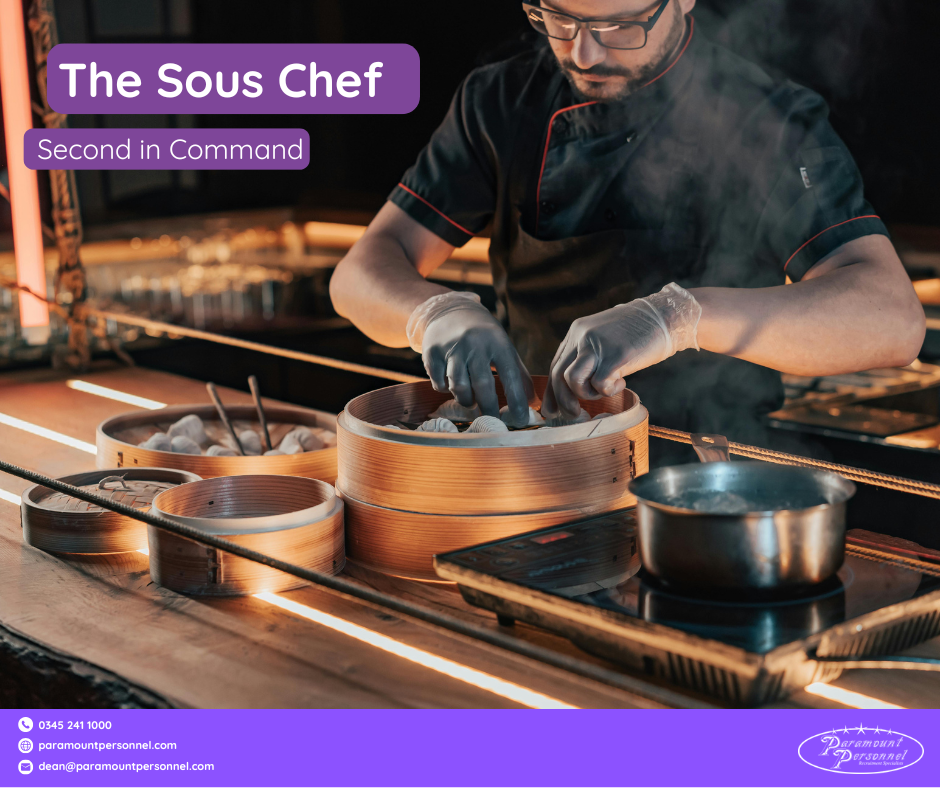
The Sous Chef – Second in Command

The Sous Chef is the Executive Chef’s right hand, responsible for the day-to-day operations of the kitchen. They are the bridge between the head chef and the rest of the team, ensuring smooth communication and efficient workflow.

Key Responsibilities:

  • Supervising Kitchen Staff: Delegating tasks, overseeing food preparation, and ensuring adherence to recipes and standards.
  • Maintaining Kitchen Organization: Managing inventory, ensuring cleanliness, and overseeing equipment maintenance.
  • Assisting with Menu Planning: Contributing ideas, testing new recipes, and providing feedback to the Executive Chef.
  • Training and Development: Mentoring junior staff, providing guidance, and fostering their culinary skills.
  • Filling in for the Executive Chef: Assuming leadership responsibilities in their absence.

Skills and Qualifications:

  • Strong culinary skills and experience in various kitchen stations
  • Excellent communication and interpersonal skills
  • Ability to work under pressure and manage multiple tasks
  • Leadership qualities and team spirit
  • Knowledge of food safety and hygiene procedures

Career Path:

Sous Chefs often rise through the ranks from line cook positions. Culinary education and certifications can be advantageous.

Do you have these qualities? Are you ready to take your culinary career to the next level?  Check out our latest vacancies  or contact our specialist hospitality recruiters today!

Coming next …. The Line Cooks – Heart of the Kitchen

Welcome to our culinary journey behind the scenes! Most people are familiar with the title ‘chef,’ but few understand the intricate dance and diverse roles within a professional kitchen. This blog series aims to shed light on the individuals who make the magic happen, from prepping ingredients to plating exquisite dishes. We’ll delve into the responsibilities, skills, and career paths of each key player, offering a comprehensive look at the brigade system that keeps kitchens running smoothly. Join us as we explore the fascinating world of culinary professionals!


The Executive Chef – Kitchen Maestro

The Executive Chef is the conductor of the culinary orchestra. They are the ultimate authority in the kitchen, responsible for everything from menu creation and cost control to staff management and ensuring a seamless dining experience.

Key Responsibilities:

  • Menu Design: Crafting innovative and enticing menus that align with the restaurant’s concept and target audience.
  • Cost Management: Overseeing budgets, negotiating with suppliers, and optimizing inventory to maximize profitability.
  • Staff Management: Hiring, training, and supervising kitchen personnel, fostering a positive and productive work environment.
  • Quality Control: Maintaining impeccable hygiene standards, ensuring consistent food quality, and adhering to safety regulations.
  • Customer Satisfaction: Addressing customer feedback, resolving complaints, and striving for excellence in dining experience.

Skills and Qualifications:

  • Extensive culinary experience and expertise
  • Strong leadership and communication skills
  • Exceptional organizational and time management abilities
  • In-depth knowledge of food safety and hygiene regulations
  • Business acumen and financial management skills

Career Path:

Aspiring Executive Chefs typically start in junior positions and work their way up, gaining experience and expertise in various culinary roles. Culinary degrees and certifications can enhance career prospects.

Do you have these qualities? Are you ready to take your culinary career to the next level?  Check out our latest vacancies  or contact our specialist hospitality recruiters today!

Coming next …. The Sous Chef – Second in Command

The hospitality industry thrives on people. Finding the right people, those who can create exceptional guest experiences, is where a skilled recruiter comes in. But what separates a good hospitality recruiter from a truly great one? At Paramount Personnel, we know it takes a unique blend of skills and characteristics. Here’s the inside scoop:

1. Passion for the Industry:

A great hospitality recruiter isn’t just filling roles; they’re passionate about the industry itself. They understand its nuances, the fast-paced environment, and the diverse range of positions available. This passion translates into genuine enthusiasm when connecting with candidates.

2. Exceptional People Skills:

This might seem obvious, but it’s crucial. A top-notch recruiter possesses exceptional communication and interpersonal skills. They can build rapport quickly, actively listen to candidate needs, and effectively convey job requirements and company culture.

3. A Keen Eye for Talent:

Beyond reviewing resumes, a great recruiter can spot those intangible qualities that make a candidate shine. They can identify individuals with the right personality, attitude, and work ethic to thrive in a customer-facing role.

4. Adaptability and Resilience:

The hospitality industry is dynamic. A successful recruiter can adapt to changing demands, handle unexpected challenges, and remain persistent in the face of setbacks. They’re comfortable juggling multiple roles and priorities while maintaining a positive attitude.

5. Networking Savvy:

Building and maintaining a strong network is essential. Great recruiters are constantly connecting with industry professionals, attending events, and utilizing online platforms to expand their reach and source top talent.

6. A Focus on Culture Fit:

Finding candidates who align with a company’s culture is paramount. A skilled recruiter takes the time to understand the unique culture of each client and seeks candidates who will not only excel in the role but also contribute positively to the team.

7. Tech-Savviness:

In today’s digital world, a great recruiter embraces technology. They utilize applicant tracking systems, online job boards, and social media platforms to streamline their workflow and reach a wider pool of candidates.

8. Ethical and Professional:

Integrity is non-negotiable. A great recruiter adheres to ethical recruitment practices, maintains confidentiality, and treats all candidates with respect and fairness.

Paramount Personnel: Your Partner in Hospitality Recruitment

At Paramount Personnel, we embody these characteristics in our approach to hospitality recruitment. We’re more than just recruiters; we’re your partners in finding the talent that will elevate your business.

In our last blog, we talked about the pros and cons of working in hospitality over the Christmas period. We know it can be a wild ride, a mix of festive cheer and utter chaos. But for those of you brave souls who are taking on the challenge, here are some tips to not just survive, but actually thrive this Christmas:

1. Embrace the Festive Spirit (Without Overdoing It)

Yes, you’ll hear Mariah Carey’s “All I Want for Christmas Is You” approximately 3,000 times. And yes, you might start seeing tinsel in your sleep. But try to embrace the festive atmosphere! Get into the spirit with a fun Christmas jumper, or suggest a Secret Santa with your colleagues. A positive attitude can be contagious, and it might even rub off on those grumpy customers!

2. Communication is Key

Things get hectic during the holidays. Make sure you’re communicating clearly with your colleagues and your managers. Don’t be afraid to ask for help when you need it, and speak up if you’re feeling overwhelmed. Remember, teamwork makes the dream work (even if the dream involves a mountain of dirty dishes).

3. Find Your Zen

The holidays can be stressful, even more so when you’re working in a fast-paced environment. Find little ways to de-stress throughout your shift. Take a few deep breaths when things get crazy, listen to some calming music on your break, or treat yourself to a mince pie. You deserve it!

4. Plan Your Time Off (Even if it’s Short)

You might not have the whole holiday season off, but make the most of the time you do have. Plan something fun for your days off, even if it’s just a cozy night in with a Christmas movie. Having something to look forward to can make all the difference.

5. Remember the Reason for the Season

Amidst the chaos of the Christmas rush, it’s easy to lose sight of what it’s all about. Take a moment to appreciate the good things: the festive cheer, the shared laughter with colleagues, and the satisfaction of helping people celebrate. And hey, you’re earning money while everyone else is spending it!

Happy Holidays from Paramount Personnel!

We hope these tips help you navigate the festive season with a smile. From everyone at Paramount Personnel, we wish you a happy, healthy, and (dare we say) peaceful Christmas!

Check out our latest vacancies  or contact our specialist hospitality recruiters today!

#ChefLife #CulinaryTalent #HospitalityJobs #ParamountPersonnel”

Job email alerts

Receive an email alert for vacancies you are interested in.

Paramount Personnel